
ترك رسالة
إذا كنت مهتمًا بمنتجاتنا وترغب في معرفة المزيد من التفاصيل، يرجى ترك رسالة هنا، وسنرد عليك في أقرب وقت ممكن.
تابعنا




File Name: Full Environmental and Social Impact Assessment (ESIA) Report Applicable Certification Standard: ProTerra Standard V5.0
Certified Entity: Xiamen Yung Yong Co., Ltd.
Production & Processing Facility: Core supplier
Raw material Supply Base: Core agricultural base
Products Covered by Assessment: Frozen soy beans, broad beans,green beans and other frozen fruits and vegetables
Assessment Date: 20 August 2026
Version: V1.0
File Status: Internally controlled document (only the public ESIA summary shall be disclosed externally)
To meet the environmental and social risk management requirements for supply chains under ProTerra Standard V5.0, our company has conducted a systematic Environmental and Social Impact Assessment (ESIA) covering the full supply chain of upstream planting bases, production processing plants and trading operation entities within the scope of this certification. This assessment identifies potential environmental risks, social risks and compliance risks across all processes, analyses impact severity and likelihood of occurrence, and establishes risk mitigation, control, monitoring and continuous improvement measures to ensure sustainable, compliant and transparent supply chain operations.
The ESIA assessment boundary fully covers the entire supply chain for this ProTerra certification, including three tiers of activities:
Includes all activities for certified fruit and vegetable varieties: field cultivation, agro input management, irrigation, field maintenance, harvesting, field waste management, field labour management and farmland ecosystem conservation.
Covers all production activities: raw material receiving, washing, sorting, blanching, sterilisation, freezing, grading, packaging, warehousing, cold store operation, wastewater treatment, equipment maintenance, workshop labour management, work safety administration and waste management.
Covers business activities including supply chain procurement control, base auditing, traceability management, order administration, customer delivery, supply chain social responsibility oversight and information disclosure management.
(1) ProTerra Standard V5.0 Standard for Sustainable Agriculture and Food Supply Chains (2) Environmental Protection Law of the People’s Republic of China (3) Work Safety Law of the People’s Republic of China (4) Labour Law of the People’s Republic of China, Labour Contract Law of the People’s Republic of China (5) Local regulatory standards for sewage, solid waste, noise and atmospheric emissions (6) Specifications governing agricultural input management and farmland ecology conservation
This ESIA adopts a multi dimensional comprehensive assessment approach:
1. On site inspection: field investigation at planting bases and full site walk through audits of manufacturing workshops
2. Document review: verification of qualification certificates, ledgers, records and institutional procedures
3. Stakeholder interviews: discussions with base administrators, growers, workshop staff, safety managers, human resources personnel and company representatives
4. Risk identification: comprehensive identification of risks relating to environment, society, safety, labour rights, local communities, land tenure and biodiversity
5. Risk ranking: classification into high , medium and low risk levels
6. Formulation of mitigation measures, monitoring plans and continuous improvement mechanisms
Potential risks: high water consumption for field irrigation at bases and cleaning processes in the factory; non standard discharge of production wastewater.
Control measures:
1. Water saving irrigation practices are implemented at planting bases to eliminate wasteful flood irrigation.
2. The factory optimises cleaning procedures with staged water reuse to reduce water consumption.
3. Pre treated production wastewater is discharged into the municipal sewage network in compliance with discharge standards.
4. Water use and drainage ledgers are maintained; equipment is regularly inspected for leaks and spillages.
Potential risks: improper disposal of field weeds, crop residues, production off cuts, packaging waste, domestic waste and small volumes of laboratory waste.
Control measures:
1. Planting residues are either recycled on site for resource utilisation or collected for authorised off site removal.
2. Fruit and vegetable processing off cuts are centrally collected and disposed of in accordance with regulations.
3. Paper and plastic packaging waste is sorted and recycled via qualified recycling contractors.
4. No illegal storage, dumping or transfer of hazardous waste occurs.
Potential risks: high power energy consumption by cold stores, freezing equipment and production machinery.
Control measures:
1. Periodic equipment maintenance is performed to improve energy efficiency.
2. Production schedules and cold store operation cycles are optimised to avoid unnecessary energy consumption.
3. Energy saving and consumption reduction practices are continuously promoted to lower carbon emissions.
Potential risks: soil contamination and farmland ecosystem disturbance caused by inappropriate pesticide and fertiliser application; risks of deforestation and vegetation destruction.
Control measures:
1. Caifutong Vegetable Specialized Cooperative implements standardised field management, uses permitted agro inputs and prohibits restricted/banned pesticides.
2. Scientific fertilisation is applied to mitigate soil compaction and contamination risks.
3. All planted areas are legally owned farmland; no deforestation, wetland encroachment or destruction of protected ecological zones takes place.
4. Peripheral field vegetation and minor local habitats are conserved to maintain stable regional biodiversity.
Potential risks: improper storage and handling of pesticides, fertilisers, workshop disinfectants and laboratory reagents.
Control measures:
1. Agro inputs are managed by dedicated personnel with records for incoming receipt, issuance and recovery of unused materials.
2. Chemicals are stored separately away from fire hazards and food raw materials.
3. All operating personnel receive safety training.
Potential risks: excessive working hours, non standard remuneration, discrimination, child labour and forced labour risks.
Control measures:
1. All labour arrangements at bases and the factory comply with applicable laws; there is no child labour, forced labour or discriminatory practice.
2. Employment agreements are signed for all staff; wages are paid in full and on time and meet or exceed local minimum wage requirements.
3. Overtime work is voluntary, subject to time limits and compensated with full overtime pay.
4. A staff grievance and feedback mechanism is established to protect employee rights.
Potential risks: physical hazards arising from field operations, machinery operation, cold store work and manufacturing processes, including slips, falls, collisions and mechanical injury.
Control measures:
1. All personnel are provided with personal protective equipment (PPE) and required to use it correctly.
2. Machinery is fully fitted with safety guards and subject to regular inspection and maintenance.
3. Regular safety training, emergency drills and hazard inspections are conducted.
4. First aid supplies and emergency materials are available; occupational health management is implemented.
Potential risks: nuisance to neighbouring communities from production related noise, wastewater and waste.
Control measures:
1. Equipment is regularly maintained for noise reduction to contain operational noise levels.
2. Strict control of three types of waste (wastewater, waste gas, solid waste) prevents community nuisance.
3. Open communication channels with local communities are maintained to enable public oversight.
Land parcels farmed by Core agricultural base and construction land for Core supplier. have clear legal title and complete formalities. There are no land disputes, land encroachment, resettlement conflicts or unauthorised land occupation, fully satisfying ProTerra land tenure requirements.
Stakeholders consulted during this ESIA assessment include base farm managers, field operators, factory production, quality control, safety and human resources staff, senior management and supply chain managers from the trading company. Feedback on environmental management, agricultural practices, work safety and labour administration has been collected and incorporated into the improvement action list, ensuring a transparent, traceable and controllable assessment process.
Following comprehensive assessment: environmental and social risks across the certified supply chain (planting base + processing factory + trading company) are overall controllable, compliant and classified as low risk. Existing corporate management systems, control measures and on site implementation satisfy requirements under ProTerra Standard V5.0. No major environmental violations, critical safety hazards or material social non compliance issues have been identified.
1. The enterprise conducts an annual review of supply chain environmental and social risks.
2. A new ESIA assessment is triggered immediately upon base relocation, capacity expansion, process modification or supply chain restructuring.
3. The public ESIA summary published on the corporate website is updated synchronously to ensure publicly disclosed information remains current and valid.
This Environmental and Social Impact Assessment for the full supply chain consisting of Core agricultural base, Core supplier and Xiamen Yung Yong Co., Ltd. is complete, authentic and valid. Supply chain environmental management, social responsibility, labour rights protection, work safety, land tenure compliance and ecological conservation satisfy ProTerra Standard V5.0 requirements. Risks are adequately controlled to enable sustainable and compliant operations.
Assessment Prepared by: Xiamen Yung Yong Co., Ltd.
Assessment Date: 1 September 2026

ترك رسالة
امسح ضوئيًا إلى واتساب :

 English
 Français
 Русский
 Español
 عربي
عربي 中文
中文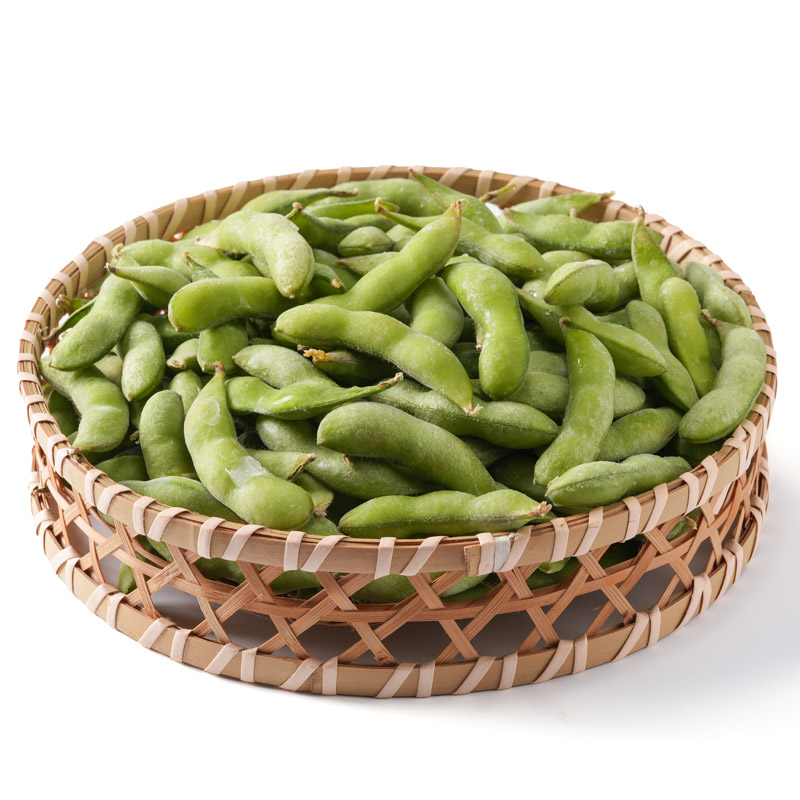

 IPv6 الشبكة المدعومة